

A gymnastics bar for kids can turn a small area of your home into a place where children can practice strength, coordination, balance, and basic gymnastics skills. For a child who already takes gymnastics classes, a home bar can also provide extra time to work on skills between practices.
But choosing the right bar is not as simple as picking the one with the highest weight limit or the lowest price. Kids grow quickly, and gymnastics puts different forces on equipment than ordinary hanging or pull-up exercises. Stability, height adjustment, construction, floor space, and proper safety equipment all matter.
If you are shopping for a gymnastics bar for kids, this guide will help you understand what to look for, which features are most important, and how to create a safer practice area at home.
What Is a Gymnastics Bar for Kids?

A gymnastics bar for kids (often referred to as a home kip bar, training bar, or junior horizontal bar) is a scaled-down, freestanding version of the uneven bars used in professional competitive gymnastics. Designed specifically for home play and skill conditioning, these bars feature adjustable height settings, compact frame footprints, and weight limits tailored to growing young athletes.
Unlike fixed outdoor playground monkey bars, a home gymnastics bar is engineered for technical practice. It allows young gymnasts to perform foundational movements—such as pullovers, casts, back hip circles, and kipping drills—on a comfortable wood-clad or fiberglass rail in the safety of their living room, basement, or playroom.
Why Invest in a Home Gymnastics Bar?
Before diving into steel gauges and measurements, it helps to understand what a quality home bar provides for your child’s athletic development.
- Accelerated Skill Mastery: Gymnastic execution relies heavily on muscle memory. Having a home bar allows kids to perform daily repetitions of foundational skills—like pullovers, chin-up hold variations, and leg lifts.
- Building Upper Body & Core Strength: You don't need a commercial gym to build elite core stability. Simple hanging drills and cast practices target the latissimus dorsi, core abdominis, and grip strength faster than almost any other exercise, which is highly beneficial according to pediatric sports conditioning guidelines.
- Active Physical Fitness: In an era of increasing screen time, a home gymnastics bar offers an engaging, physically demanding activity that easily helps children meet the CDC’s recommended 60 minutes of daily physical activity.
- Boosting Athletic Confidence: Mastering a tricky skill in the comfort of home—without the pressure of peers watching—builds immense self-esteem that translates directly back to class.
Quick Comparison: Key Types of Home Gymnastics Bars
Not all home gymnastics bars are built the same. Depending on your home layout, child’s age, and gymnastics level, choose between three primary styles:
| Feature / Bar Type | Portable / Folding Bar | Standard Heavy-Duty Bar | Commercial Training Bar |
| Price Range | $80 – $130 | $150 – $280 | $300 – $500+ |
| Skill Level | Beginner (Pre-Gym, Level 1) | Intermediate (Levels 1–3) | Advanced (Level 4+ / Team) |
| Dynamic Weight Capacity | Up to 100 lbs | 150 – 230 lbs | 300+ lbs |
| Storage | Folds in 30 seconds | Fixed floor footprint | Dedicated space / Garage |
| Can Perform Kips? | ❌ No (Will tip) | ⚠️ Only with base extensions | ✅ Yes (Fully stable) |
A. Portable / Folding Gymnastics Bars
- Best For: Small spaces, young beginners (Ages 3–7), and casual fun.
- How It Works: These lightweight bars feature collapsible side legs that fold flat in seconds, allowing you to slide the equipment under a bed or into a closet.
- Pros: Highly space-efficient, budget-friendly, easy to store.
- Cons: Lower weight capacity; prone to swaying during higher-level skills; shorter overall lifespan.
B. Standard Heavy-Duty Gymnastics Bars (T-Base or Flat-Bar Base)
- Best For: Level 1–3 gymnasts, growing kids (Ages 6–12), and serious home practice.
- How It Works: Constructed with heavy-gauge steel tubing and extendable base legs, these bars take up a fixed footprint on your floor for superior structural stability.
- Pros: Excellent stability, high weight capacities (150–230 lbs), height-adjustable across multiple feet.
- Cons: Takes up dedicated floor space; heavy to shift around.
C. Advanced Commercial/Training Bars (Dual-Bar or Wall-Anchored Systems)
- Best For: Level 4+ competitive gymnasts, high-impact routines, and older kids/teens.
- How It Works: Built similarly to professional gym equipment, these feature heavy-duty steel frames, dual tie-downs, or extended stability bars capable of supporting high-impact swings and kipping.
- Pros: Maximum safety, zero wobble, handles advanced skills (kips, cast handstands).
- Cons: Higher cost, requires significant space, more complex assembly.
Essential Technical Features to Look For Before You Buy
To protect your investment and more importantly—your child's safety, keep these crucial factors at the top of your checklist.
Frame Stability and Base Structure
Safety starts at the floor. Look for bars engineered with a triangular structural design or wide T-base frames that comply with general sports equipment stability standards.
- Square Steel Tubing: Heavy-duty square steel tubing offers substantially better resistance against rotational twisting than thin round tubing.
- Non-Slip Rubber Base Caps: Ensure the bottom rails have thick, non-skid rubber feet. This prevents the bar from sliding across hardwood or laminate flooring during dynamic movements.
Coach’s Safety Tip: The "Wobble Test""In a certified gym, we bolt equipment directly into concrete. At home, you can't do that. Before letting your child attempt a Back Hip Circle, stand on the base legs yourself and try to shake the vertical posts. If the bar sways more than 2 inches side-to-side, tighten your hardware or add sandbags to the rear stabilizer bar immediately." — Coach Sarah Jenkins
Rail Material: Wood vs. Metal vs. Fiberglass
The rail itself is where your child makes direct contact. The material dictates both grip comfort and performance:
- Solid Wood (Beech or Maple): Offers an authentic gymnastics feel and excellent natural grip with chalk.
- Fiberglass Core with Wood Coating: The gold standard. The inner fiberglass core gives the bar elastic flex (crucial for reducing wrist impact and stress injuries), while the outer wood layer provides classic grip.
- Steel/Metal Bars: Common in lower-cost models, but slippery and tough on young hands. Avoid pure steel rails unless you plan to wrap them completely in grip tape.
Height Adjustability & Locking Mechanisms
Children grow fast, and their skills evolve even faster.
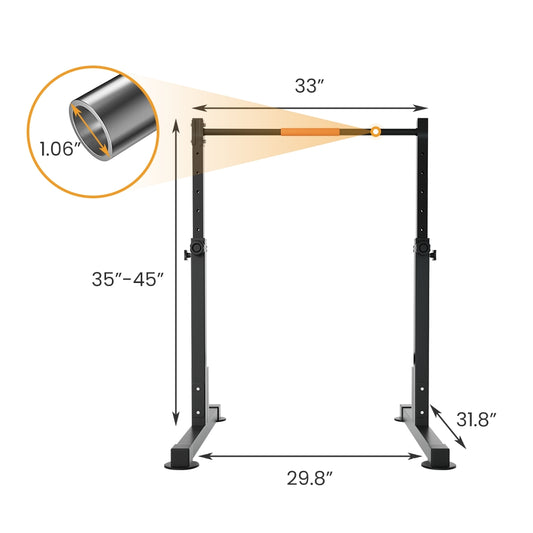
- Choose a bar that adjusts smoothly from 36 inches to at least 55–60 inches.
- Dual-Locking Mechanism: Look for a pull-pin knob combined with a secondary screw-lock clamp to guarantee the bar cannot accidentally slip down while your child is upside down.
Dynamic Weight Capacity vs. Static Weight Capacity
- Static Weight: The weight the bar holds while completely motionless.
- Dynamic Weight: The real-world force generated when a child is swinging, landing, or casting.
- Rule of Thumb: Always buy for dynamic weight limit. If your child weighs 60 lbs, a bar rated for 100 lbs static weight will likely wobble or bow under dynamic swinging forces. Look for a dynamic rating of at least 150–200+ lbs.
Top Recommended Gymnastics Bars for Home

To save you hours of research, here are top-rated market picks across three popular categories:
Best Overall Choice: Safly Fun adjustable gymnastics bar for kids
- Target Audience: Beginners to Level 3 intermediate gymnasts (Ages 3–12).
- Why It Wins: Engineered with a heavy-duty triangular steel frame and non-slip rubber stability caps, Safly Fun strikes the perfect balance between professional-grade safety and home-friendly design. It features a dual-locking mechanism (pull-pin + screw clamp) and a smooth, height-adjustable wood-composite rail that mimics official gym equipment.
- Pros: Exceptional dynamic stability, high weight capacity (supports up to 150+ lbs dynamic load), effortless 10-minute assembly, and full compatibility with standard 4ft x 8ft mats.
- Cons: Takes up a dedicated 4x5 ft floor footprint (though extremely stable).
Best Budget Option: BalanceFrom Adjustable Kip Bar
- Target Audience: Beginners and intermediate recreational gymnasts (Ages 5–10).
- Why It Wins: Offers solid steel construction and a dual-locking mechanism at an affordable price point under $150.
Best for Small Spaces: Zupapa Folding Gymnastics Bar
- Target Audience: Younger kids (Ages 3–7) in apartments or smaller bedrooms.
- Why It Wins: Folds flat in under 30 seconds for storage behind doors or under beds while retaining a sturdy triangular frame design.
Non-Negotiable Safety Gear You Must Have
Buying the bar is step one. Setting up a safe home practice environment requires a few key accessories to protect against stumbles and falls, mirroring American Academy of Pediatrics (AAP) sports safety guidelines.
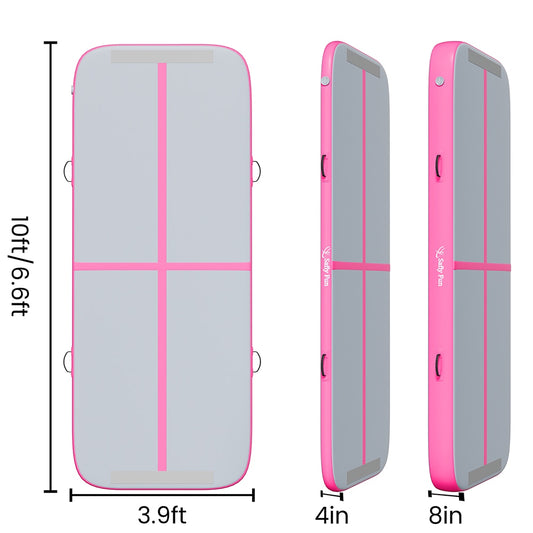
- Gymnastics Landing Mat (Essential): Never allow a child to practice on a bare floor or thin rug. Use a minimum 4ft x 8ft folding mat with at least 2 inches of dense EPE foam.
- Crash Pad (For Level 2+ Skills): When practicing higher dismounts, hip circles, or kips, place an additional 4-inch crash pad directly over your standard landing mat.
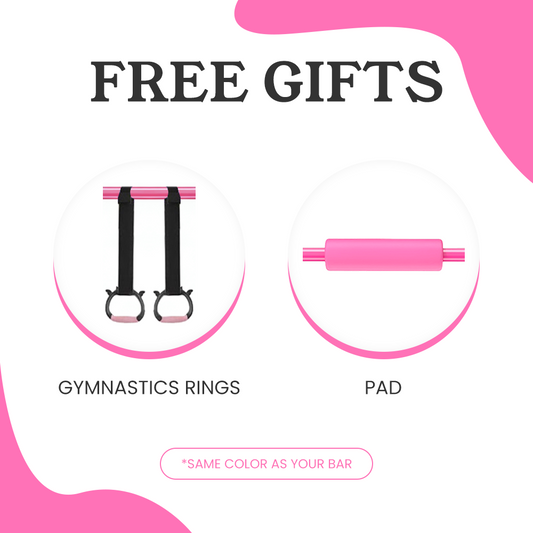
- Bar Pad / Foam Cover: Wraps around the bar rail to cushion hip casts and belly drop drills, preventing painful bruising on beginner hips.
- Gymnastics Chalk / Hand Grips: Prevents sweaty hands from slipping and protects young hands against friction blisters (rips).
Parent Pro-Tip on Mats"Don't try to save money by using a standard yoga mat or a thin exercise pad under a gymnastics bar. Over 80% of minor home practice injuries, like wrist sprains, happen because impact energy isn't properly absorbed by adequate high-density foam."
Age & Skill Level Guide: What Does Your Child Need?

Matching equipment to your child’s stage ensures they don't outgrow the bar in six months or end up with gear ill-suited for their skills, according to the USA Gymnastics Development Program standards.
Pre-Gym & Beginners (Ages 3–6)
- Focus: Balance, hanging strength, spatial awareness, upside-down comfort.
- Recommended Setup: A lightweight, foldable bar paired with a 2-inch folding mat.
- Key Spec: Easy height adjustment down to 36 inches.
Intermediate Gymnasts (Ages 6–10 | USAG Levels 1–3)
- Focus: Casts, back hip circles, pullovers, core conditioning.
- Recommended Setup: Heavy-duty steel T-base bar with a wood/fiberglass composite rail.
- Key Spec: Minimum 150 lb dynamic weight rating; height extension up to 55-60 inches.
Advanced Competitive Gymnasts (Ages 8+ | USAG Level 4+)
- Focus: Kips, front hip circles, clear hips, cast handstands.
- Recommended Setup: Commercial-grade training bar with base extensions or floor anchor capabilities.
- Key Spec: Wood-clad fiberglass rail, 300+ lb limit, wide base stabilizers extending 6ft+.
What Can Kids Practice on a Gymnastics Bar?
A home gymnastics bar is one of the most versatile pieces of training equipment you can own. Depending on your child's age, grip strength, and skill level within the USAG Development Program, they can practice a wide range of conditioning exercises, foundational skills, and advanced bar routines at home.
Beginner Skills & Core Conditioning (Pre-Gym & Level 1)
- Pullovers: The essential entry-level skill where the gymnast pulls their chest to the bar, kicks their legs up and over, and ends in a front support position.
- Cast Drills: Building hip-to-bar power by pressing down on the bar and lifting the hips away while maintaining tight body alignment.
- Hang Variations & Holds: Chin-up holds, L-sits, tucked leg lifts, and hollow body hangs that develop foundational grip, shoulder, and abdominal strength.
- Forward Hip Rolls / Dismounts: Controlled forward rolls over the bar ending in a soft landing on a high-density safety mat.
Intermediate Skills (USAG Levels 2–3)
- Back Hip Circles: Rotating 360 degrees backward around the bar starting and ending in a clean front support position.
- Sole Circles & Mill Circles (Stride Circles): Technical skill progressions that teach leg positioning, weight transfer, and rotational balance around a flexible rail.
- Cast to Horizontal: Executing higher, more powerful casts where the hips and legs reach horizontal level or higher with straight arms.
Advanced Drills (USAG Level 4+)
- Kip Drills & Glide Kips: Using forward momentum and leg extension to snap the hips up to the bar from a swing. (Note: Requires a heavy-duty bar equipped with base extensions to prevent frame tipping).
- Cast Handstands & Clear Hips: Advanced conditioning drills focusing on shoulder block strength and body tension for high-level competitive routines.
Real-World Space & Room Preparation Checklist
Before purchasing, grab a tape measure and verify your available room dimensions:
- Ceiling Height Clearance: Measure carefully! When a child performs a handstand or high cast on a 5-foot bar, their body extends another 3 to 4 feet higher. You need at least 8.5 to 9 feet of vertical ceiling clearance.
- Floor Footprint: A standard heavy-duty home bar covers roughly 4 feet wide by 5 to 6 feet long. Keep a 3-foot safety perimeter around all sides clear of walls, TV stands, and furniture.
- Surface Placement: Set up on flat, level flooring. Carpeted floors offer great frame traction. On hardwood, tile, or laminate, ensure non-slip rubber foot caps are completely clean and firmly gripping the floor.
Essential Maintenance & Safety Inspection Checklist
Setting up your home bar properly is only half the battle. Because dynamic swinging, casting, and dismounting create continuous rotational torque and micro-vibrations, equipment hardware naturally loosens over time.

Establishing a quick, routine inspection schedule ensures your investment stays rock-solid, squeak-free, and—most importantly—100% safe for your young athlete.
Weekly Safety & Hardware Audits
Every 7 to 10 days (or before any high-intensity practice session), take two minutes to run through this hardware check:
- Tighten Lock Knobs & Pull-Pins: Verify that the height adjustment pop-pins are fully engaged in the vertical extension holes and that the outer clamp knobs are hand-tightened snugly against the upright posts.
- Inspect Base Plate Bolts: Check the main hex bolts connecting the upright posts to the floor rails. Dynamic swinging can cause subtle loosening, leading to frame sway or annoying metallic creaking. Use the hex key provided by the manufacturer to give them a quick turn.
- Examine Welding Points: Inspect the corner joints where the base legs meet the vertical supports. Look for any hairline fractures in the powder coating or metal stress cracks, especially if your gymnast is practicing high-impact skills like back hip circles.
- Check Rubber Feet Caps: Ensure the non-skid rubber feet on all four corners of the base frame are securely attached and free of dust or debris buildup, which can compromise traction on hardwood or tile floors.
Monthly Rail Care & Material Maintenance
The bar rail bears the direct impact of hands, hips, and chalk during every workout. Proper rail maintenance extends its lifespan and prevents painful hand tears (rips).
- Wood & Composite Rail Cleaning: Wipe down wooden or fiberglass-composite rails with a dry or slightly damp microfiber cloth to remove sweat, chalk buildup, and skin oils. Never spray harsh chemical household cleaners or oil-based polishes onto a wooden rail, as this strips the wood's natural grip finish and makes it dangerously slick.
- Sand Down Wood Splinters (Solid Wood Only): If you own a solid maple or beechwood bar and notice small rough spots or micro-splinters forming over time, lightly sand the area using fine-grit sandpaper (400-grit or higher) in the direction of the wood grain, then wipe away dust with a dry cloth.
- Inspect Composite Flex Integrity: For fiberglass-core bars, check for any visible splintering, cracking, or deep grooves along the rail. A compromised fiberglass core loses its elastic flex and must be replaced immediately to prevent rail snapping.
Landing Mat & Crash Pad Maintenance
A high-quality bar is only as safe as the shock-absorbing mat sitting beneath it. Inspect your landing gear monthly to ensure max impact protection:
- Check Vinyl Seams & Zippers: Inspect the outer 18oz vinyl cover for tears, open seams, or broken zippers. Exposed foam absorbs moisture and degrades quickly, so patch small vinyl tears immediately using heavy-duty vinyl repair tape or tear-aid patches.
- Test Foam Compression ("Bottoming Out"): Over time, high-impact landing zones can compress the internal EPE or EVA foam. Press down firmly with your heel or fist in the center of the mat. If you easily feel the hard floor beneath, the foam core has lost its shock-absorption capacity and needs replacement.
- Sanitize Mat Surfaces: Clean vinyl mat surfaces bi-weekly using a mild disinfectant wipe or a solution of warm water and gentle dish soap to eliminate bacteria, sweat odors, and chalk dust. Allow the mat to air-dry completely before folding it for storage to prevent mold or mildew growth in seam folds.
Coach Sarah's Golden Maintenance Rule:"Make it a habit to involve your child in the weekly 'Wobble Test.' Teaching young gymnasts to check their own pop-pins and give the bar posts a firm shake before stepping onto the mat builds a lifelong culture of equipment safety and athletic responsibility."
Which Safly Fun Gymnastics Bar Is Right for Your Child?
Selecting the right gymnastics equipment depends on your child's age, training goals, and available floor space. Safly Fun offers engineered home gymnastics bars tailored for every stage of athletic development, combining heavy-duty steel stability with child-friendly safety features.

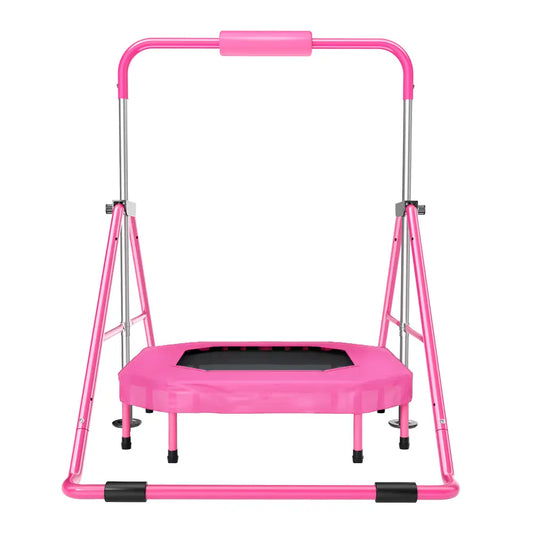
Safly Fun Foldable Gymnastics Bar
- Best For: Toddlers, beginners, and small living spaces (Ages 3–8).
- Key Features: Easy-fold mechanism for quick storage, lightweight yet sturdy powder-coated frame, and tool-free height adjustments (3ft to 5ft).
- Why Choose It: Perfect for young kids learning basic swings, pullovers, and hip hangs without permanently occupying playroom space. It folds flat against a wall in seconds when practice is done.
Safly Fun Adjustable Gymnastics Bar
- Best For: Intermediate gymnasts practicing Level 1–3 skills (Ages 6–12).
- Key Features: Reinforced T-frame base with extended side support arms, dual-locking pop-pin mechanisms, and a solid wood-composite rail designed to mimic official competition bars.
- Why Choose It: Built to handle dynamic loads up to 150+ lbs, this model resists wobble during high-momentum skills like back hip circles, cast-to-straddles, and kips.
Safly Fun Gymnastics Bar & Mat Combo Bundle
- Best For: Parents seeking a complete, hassle-free home setup.
- Key Features: Matches a Safly Fun adjustable training bar with a custom-fit 4ft x 8ft high-density EPE foam landing mat wrapped in 18oz waterproof vinyl.
- Why Choose It: Buying the combo guarantees that your safety mat sits flush beneath the bar frame without awkward gaps, providing optimal shock absorption for young joints during dismounts.
Quick Comparison Guide
| Feature | Foldable Junior Bar | Heavy-Duty Kip Bar | Bar & Mat Combo Bundle |
| Skill Level | Beginner (Rec Gymnastics) | Level 1–3 Intermediate | All Levels (Complete Kit) |
| Weight Limit | Up to 100 lbs | Up to 150+ lbs | Up to 150+ lbs |
| Space Requirement | Low (Space-saving fold) | Medium (Dedicated 4x5ft area) | Medium (Dedicated 4x8ft area) |
| Rail Type | Beechwood Composite | Fiberglass Core + Wood Wrap | Premium Wood Composite |
| Included Accessories | Anti-slip rubber caps | Extension legs + clamps | Bar + 2-inch Folding Mat |
Frequently Asked Questions (FAQs)
Q1: Can my child practice a "Kip" on a home gymnastics bar?
Performing a kip generates significant horizontal force. Standard folding bars will tip over during a kip attempt. To practice kips safely at home, you need a heavy-duty training bar equipped with base extensions or sandbag stabilizers placed over the base legs.
Q2: Is a wooden bar better than a metal bar?
Yes. Wooden (or wood-veneered fiberglass) rails provide natural grip friction, absorb sweat, and feel identical to official equipment used in USAG-certified Member Clubs. Metal bars get slick quickly and cause painful hand blisters.
Q3: How thick should the safety mat under the bar be?
For basic hanging, strength holds, and pullovers, a 2-inch thick high-density foam mat is sufficient. For higher dismounts, casting, or flipping skills, place a 4-inch crash pad over your folding mat.
Final Verdict: Bringing the Gym Home Safely
Investing in a gymnastics bar for kids is a wonderful way to support your child's passion for fitness and athletic growth. By prioritizing base stability, choosing a quality wood-composite rail, pairing it with a thick safety mat, and double-checking your room's ceiling height, you’ll create a safe, durable practice space right in your home.
Ready to transform your playroom into a safe gymnastics zone? Explore the full line of ASTM-certified Safly Fun Gymnastics Bars and Safety Accessories today. Discover heavy-duty, adjustable kip bars designed to grow with your young athlete and give you total peace of mind with every swing!