

Children typically begin trying out the pull-up bar around 1.5 to 2 years of age (approximately 18 to 20 months). At this stage, the focus of the exercise is not on “pull-ups,” but on the basic “dead hang,” which is designed to build grip strength, upper-body strength, and body control.
Why do children/toddlers need to play on the kids pull up bar ?
Hanging bars for kids—these pieces of equipment have been a staple of playgrounds since their invention in the 1920s.
Some parents and officials worry that these structures could cause scrapes or broken bones and advocate for their removal from parks and playgrounds.
A group of anthropologists from Dartmouth College presented a different perspective in the journal *Evolution, Medicine, and Public Health*: on the 100th anniversary of the invention of “adventure play” structures such as kids pull up bar, they argue that such activities fulfill biological needs inherited from apes and early humans and may be crucial for child development.
The study notes that an excessive focus on safety may deprive children of opportunities to independently explore and develop their physical and cognitive abilities in environments involving a small degree of risk. Co-author Zaneta M. Thayer, an associate professor of anthropology at Dartmouth College, suggests that children should be encouraged to engage in play involving moderate risk to foster their ability to tackle challenges independently and learn from failure.
The study’s overall findings suggest that adventurous play helps children develop resilience and self-confidence—skills that are beneficial throughout their lives;
How should children of different ages use a kids pull up bar?
1.5–2 Years Old (Introductory Stage)
Key Movement: Hold the horizontal bar with both hands in a pronated grip, arms straight, feet attempting to lift off the ground, and body relaxed while hanging.
Objective: Build basic grip strength and develop preliminary shoulder and arm control. Start with 10-second hangs, performing 2–3 sets; as ability improves, gradually increase to about 20 seconds per hang.
Safety Guidelines: Always perform under close adult supervision; ensure the landing area has sufficiently thick safety mats or a soft surface (such as rubber mats or sand); the bar should be low enough to allow an adult to catch the child at any time; avoid independent climbing or hanging from unprotected heights.
Ages 2–4 (Developmental Stage)
Key Movements: Extend the duration of hanging; under professional guidance, attempt small body swings or transfer from one short bar to another.
Objectives: Improve shoulder stability, grip endurance, and body awareness (knowing when to let go and how to adjust posture).
Safety Guidelines: Continue to ensure adult supervision; use age-appropriate climbing or horizontal bar equipment with appropriate spacing; if the child shows signs of fatigue or insufficient grip strength, assist them in getting down immediately.
Ages 5 and up (Intermediate Stage)
Key Movements: Learn more complex skills (such as monkey bar/horizontal bar climbing, swinging, and transition movements), and gradually practice moves like bar flips (in a suitable training environment and under the supervision of an adult or coach).
Objectives: To enhance upper body strength, coordination, agility, and risk assessment skills.
Safety Guidelines: It is recommended to train in stages under the guidance of a coach or an adult with climbing experience; use appropriate equipment (with spacing and height suitable for children); ensure the landing area has compliant cushioning material; progress gradually, and stop immediately if fatigue sets in.
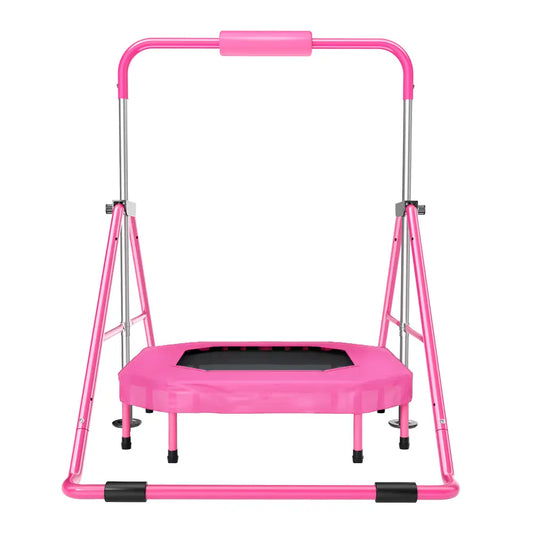
The above are recommendations on how to use kids pull up bar outdoors or at playgrounds. If you plan to use them at home, I recommend using gymnastics bars designed for home use, as they are safer.
What are the benefits of doing kids pull up bar?
- Improved Grip Strength and Fine Motor Skills: A stable grip significantly aids future learning, such as writing and holding a pencil, making it easier for children to complete their homework.
- Upper Body and Core Strengthening: Strengthens the shoulders, arms, back, and chest muscles, while improving respiratory function.
- Spinal Stretching: Hanging naturally stretches the spine, which has a positive effect on posture.
- Psychological Development: Overcoming the fear of heights builds self-confidence and courage.
Safety Precautions
- Progress Gradually: Start by training finger and grip stability before moving on to exercises where the feet leave the ground.
- Avoid Forced Pulling: Do not forcefully pull on the child’s arms to prevent joint injuries such as “pulled elbow” (radial head subluxation).
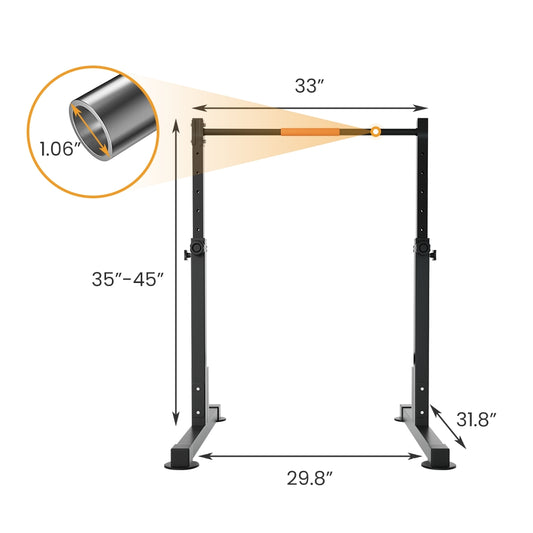
- Appropriate Height: Adjust the height of the pull-up bar so that the child can reach it with outstretched arms, and ensure that professional impact-absorbing mats are placed underneath.
- Regarding Height Growth: Although hanging from a horizontal bar can stretch the body, experts note that its direct effect on height growth is limited; vertical jumping exercises such as skipping rope are more effective.